
This January marks the 35th anniversary of Operation Desert Storm, the combat phase of the Persian Gulf War that began on January 17, 1991. Launched exactly 35 years ago today, this swift and overwhelming campaign demonstrated American leadership, military excellence, and the power of international unity in defending sovereignty and upholding the rule of law. For the veterans who served in the sands of the Middle East, Desert Storm remains a proud chapter of service, sacrifice, and success in protecting freedom against aggression.
The conflict began when Iraqi dictator Saddam Hussein invaded and annexed neighboring Kuwait on August 2, 1990, seizing control of vast oil reserves and threatening regional stability. In response, the United States—under President George H.W. Bush—built a broad international coalition of 39 nations, including key Arab allies like Saudi Arabia, Egypt, and Syria, as well as NATO partners and former Cold War adversaries. This unprecedented alliance reflected the post-Cold War hope for a "new world order" where aggression would not go unchallenged.
The operation unfolded in two phases: Operation Desert Shield (August 1990—January 1991), the defensive buildup to protect Saudi Arabia, and Operation Desert Storm, the offensive to liberate Kuwait. On the night of January 16-17, 1991, coalition air forces launched a massive, precision-guided bombing campaign that crippled Iraqi command, air defenses, communications, and supply lines.
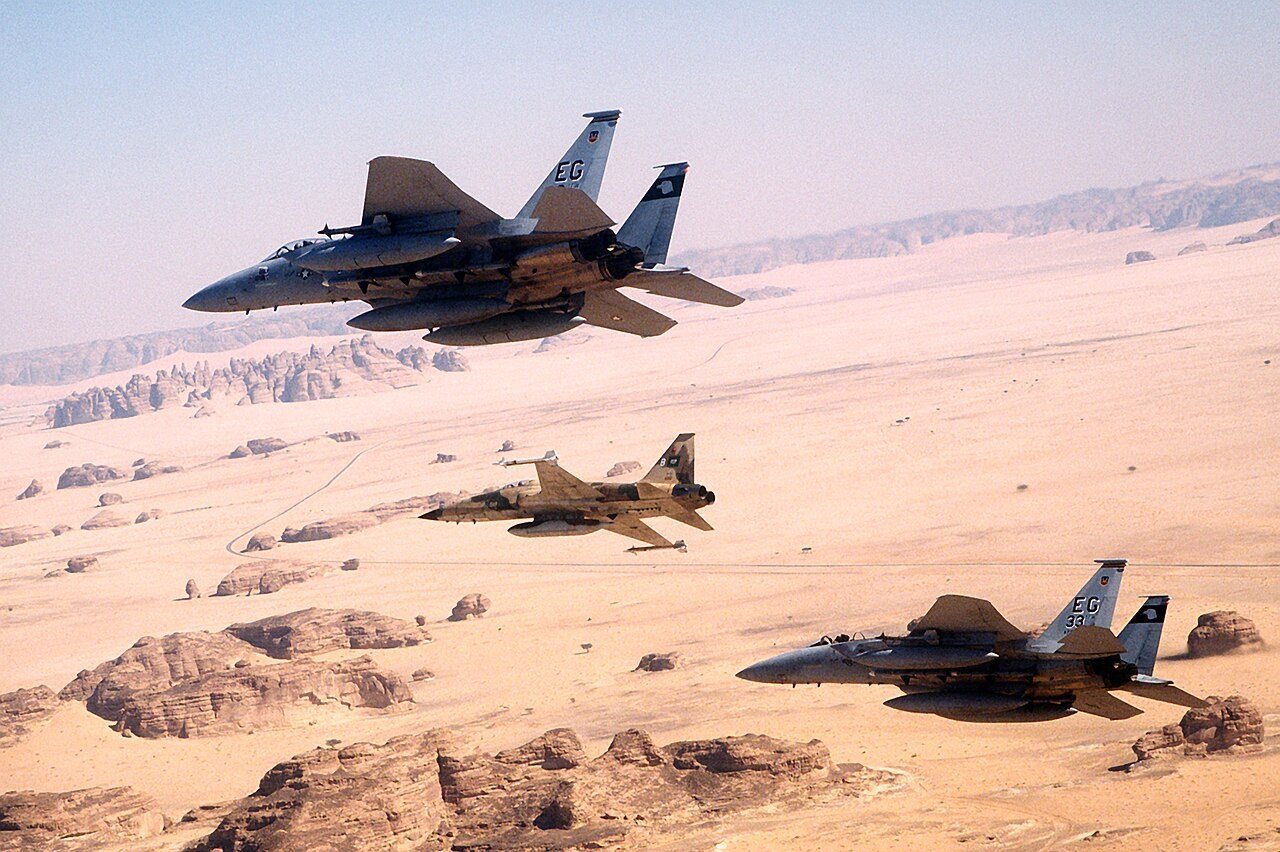
These historic images capture the opening salvos of the air campaign—F-15 Eagles and other advanced aircraft soaring into action, embodying technological superiority and unyielding determination:
Over five weeks, coalition aircraft flew more than 100,000 sorties, dropping 88,500 tons of bombs and achieving total air supremacy. Iraqi forces, once feared as the fourth-largest army in the world, were devastated before the ground war even began.
On February 24, 1991, the 100-hour ground offensive—Operation Desert Sabre—unleashed a lightning-fast armored thrust. Coalition forces, led by U.S. armored divisions and Marines, executed a brilliant "left hook" maneuver through the desert, outflanking and overwhelming Iraqi positions. Kuwait was liberated in days, with coalition troops advancing into southern Iraq before a cease-fire took effect on February 28.
The ground campaign produced iconic scenes of decisive victory: destroyed Iraqi tanks littering the desert and coalition armor advancing relentlessly.
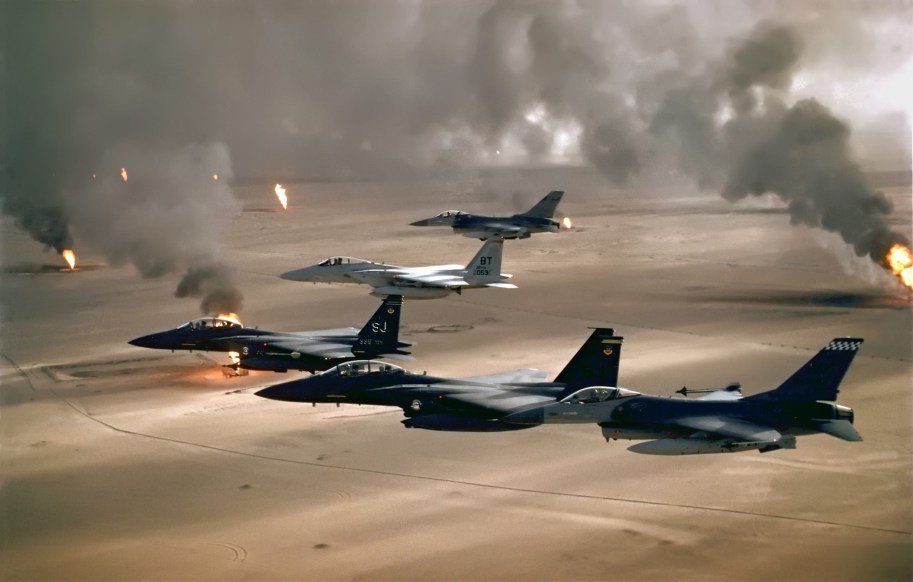
The human cost was tragically high for Iraq, with tens of thousands of casualties, while coalition losses were remarkably low: the U.S. suffered 147 battle deaths and 145 non-battle deaths. This disparity underscored the effectiveness of superior planning, training, and technology.
The retreating Iraqi army set fire to hundreds of Kuwaiti oil wells, creating an environmental catastrophe and stark symbols of destruction.
Desert Storm showcased American ideals at their finest: resolute defense of allies, commitment to international law, rapid and decisive action to restore justice, and care to minimize unnecessary suffering. It proved that when free nations stand together, tyranny can be confronted and defeated efficiently.
These powerful tributes honor the Gulf War veterans who returned home to welcoming parades and a grateful nation, as well as those who continue to serve as reminders of sacrifice.
To the Desert Storm veterans of VFW Post 8555 and across our great nation: your swift victory liberated a sovereign country, restored hope in a volatile region, and reaffirmed America's role as a beacon of freedom. Thirty-five years later, your service inspires us to remain vigilant, united, and proud. We remember your valor, honor your sacrifices, and thank you for defending the principles that make our country strong.