
On the quiet evening of February 15, 1898, in the harbor of Havana, Cuba, a tremendous explosion tore through the United States battleship USS Maine, claiming the lives of 260 American sailors and officers—more than two-thirds of her crew. The sudden, catastrophic loss of this proud vessel sent shockwaves through the United States, igniting public outrage, fueling patriotic fervor, and setting the stage for the brief but decisive Spanish-American War. For generations of American veterans, the story of the Maine stands as a solemn reminder of sacrifice, the high cost of duty, and the enduring resolve of our nation to stand for freedom and justice.
The USS Maine, a second-class battleship commissioned in 1895, had been dispatched to Havana in late January 1898 to protect American lives and interests amid Cuba's ongoing struggle for independence from Spanish colonial rule. Tensions between the United States and Spain had been rising for years, with widespread American sympathy for the Cuban revolutionaries. The Maine's presence was intended as a show of strength and reassurance, not provocation.
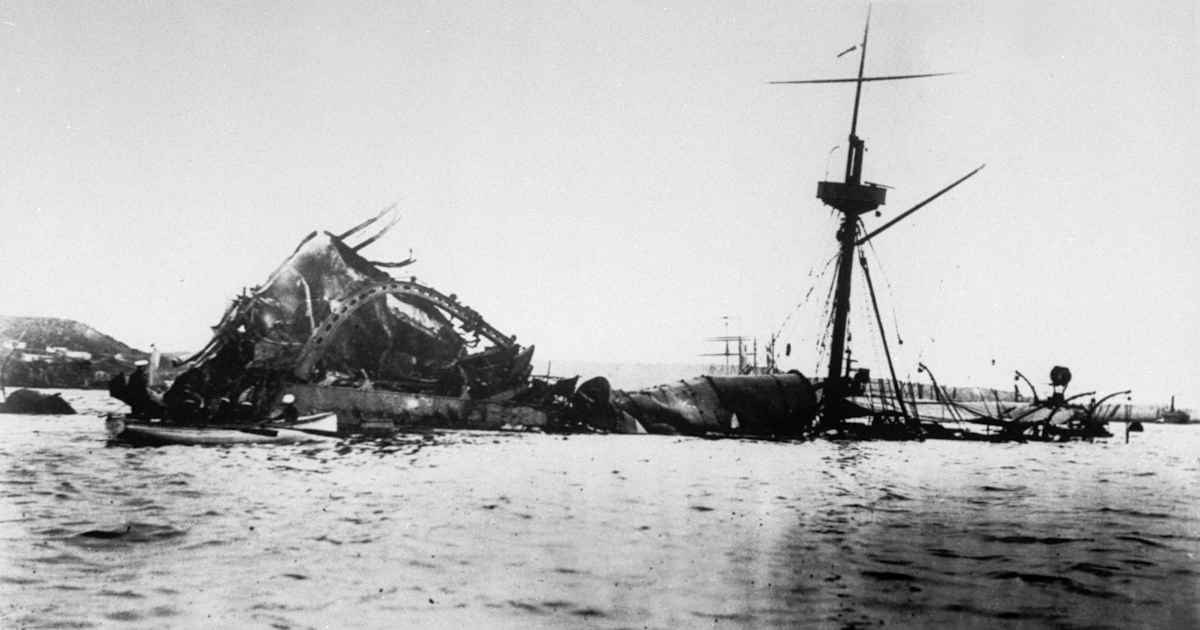
At approximately 9:40 p.m., while peacefully at anchor, a massive internal explosion ripped through the forward section of the ship, detonating her magazines and sinking her rapidly. The blast was heard across Havana, and the night sky lit up with Bj the fury of destruction.
- These historic images capture the devastating moment and its aftermath—the explosion that shook the world and the twisted wreckage that remained in Havana Harbor:
The cause of the explosion has never been definitively proven. Initial U.S. Navy investigations in 1898 concluded it was likely an external mine, though Spanish inquiries pointed to an internal accident. Later reviews—including a 1911 inquiry, a 1976 study commissioned by Admiral Hyman G. Rickover, and a 1998 National Geographic analysis—have leaned toward an internal cause, possibly a spontaneous fire in a coal bunker igniting the forward magazines. Despite the uncertainty, the immediate American response was clear: many believed Spain bore responsibility.
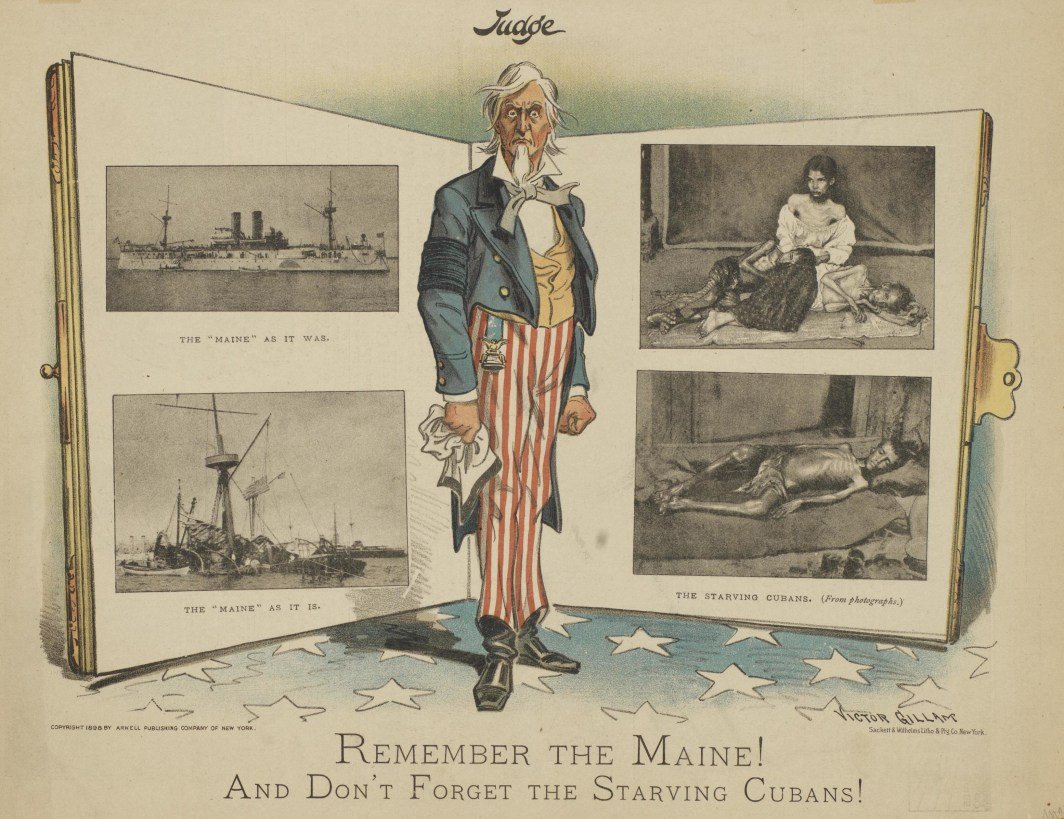
Yellow journalism in newspapers amplified the tragedy, with headlines and illustrations fueling the rallying cry "Remember the Maine! To hell with Spain!" This powerful propaganda helped unite the nation in support of intervention.
This iconic poster from the era captured the public's outrage and patriotic call to action, blending remembrance of the fallen with solidarity for the suffering Cuban people:
The sinking of the Maine accelerated the path to war. On April 21, 1898, the United States declared war on Spain. In the swift conflict that followed, American forces achieved decisive victories, liberating Cuba, Puerto Rico, Guam, and the Philippines from Spanish control. The war marked America's emergence as a global power and advanced the ideals of liberty and self-determination.
In the years that followed, the nation honored the Maine's fallen heroes with
lasting tributes. Many of the recovered remains were laid to rest at Arlington
National Cemetery, where the ship's main mast stands as a poignant memorial. Others rest in Key West, Florida, under a statue of a sailor holding an oar— symbols of eternal vigilance and sacrifice.
To the veterans of VFW Post 8555 and all who have worn the uniform: the story of the USS Maine is part of our shared legacy. It reflects the American ideals of courage in the face of uncertainty, unwavering commitment to protecting freedom, and the sacred duty to remember those who gave their last full measure. Though the exact cause remains a mystery of history, the valor and sacrifice of those 260 brave sailors endure as an inspiration to every generation.
We remember the Maine. We honor their service. And we carry forward the patriotic spirit that defines our great nation. Thank you, comrades, for keeping their memory alive.