
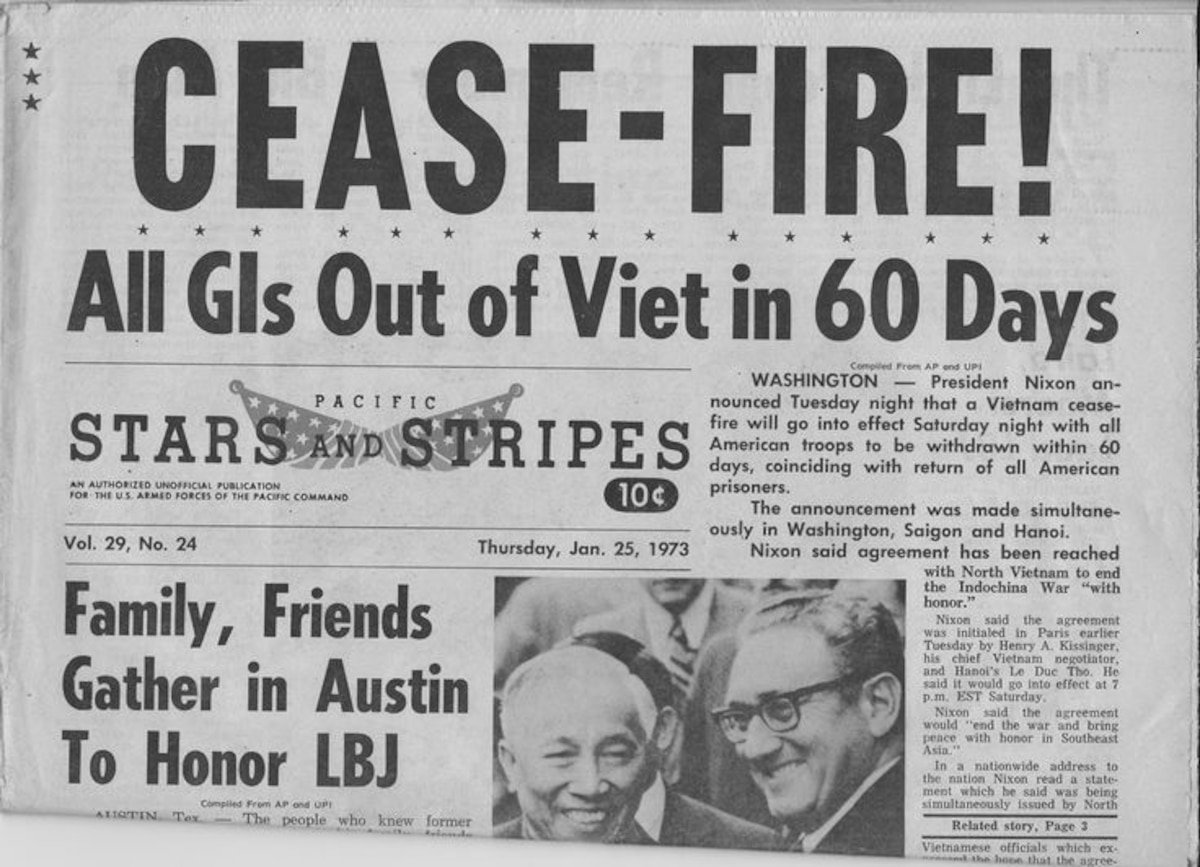
Fifty-two years ago, on January 27, 1973, the world witnessed a historic milestone in the long and painful chapter of the Vietnam War. The Paris Peace Accords—formally known as the Agreement on Ending the War and Restoring Peace in Vietnam—were signed in Paris, France, marking the official end of direct United States military involvement in the conflict. For the millions of American veterans who served with courage and sacrifice, this agreement represented a hard-fought step toward bringing our troops home, securing the release of our prisoners of war, and upholding the principles of freedom and self-determination that so many fought to defend.
The accords came after more than four years of arduous negotiations, often conducted in secret. Leading the American delegation was National Security Advisor Henry Kissinger, whose determined diplomacy played a central role. On the North Vietnamese side, Politburo member Lê Đức Thọ was the key negotiator. Their efforts earned both men the 1973 Nobel Peace Prize (though Thọ declined the award). The signing ceremony itself brought together representatives from the United States, the Republic of Vietnam (South Vietnam), the Democratic Republic of Vietnam (North Vietnam), and the Provisional Revolutionary Government of South Vietnam.
Here are iconic images from that historic signing on January 27, 1973, capturing the solemn moment at the negotiating table and the handshake between Kissinger and Thọ:

The core provisions of the accords reflected difficult compromises made in pursuit of peace:
- An immediate cease-fire across Vietnam.
- The complete withdrawal of all U.S. troops and military personnel within 60 days.
- The release of American prisoners of war (POWs), with 591 Americans returning home between February and March 1973.
- Recognition of the sovereignty and right of the South Vietnamese people to self-determination.
- The continuation of the Demilitarized Zone (DMZ) at the 17th parallel as a provisional boundary, with the goal of eventual peaceful reunification.
- The establishment of an International Commission of Control and Supervision (composed of Canada, Hungary, Indonesia, and Poland) to monitor compliance.
These terms allowed North Vietnamese forces to remain in the South—a concession that proved controversial—but they also preserved the existence of the Republic of Vietnam government under President Nguyen Van Thieu and committed the United States to postwar reconstruction aid.
For American veterans, the accords carried profound meaning. They brought an honorable end to our nation's direct combat role, fulfilled the promise to bring every American home, and demonstrated the resilience of our service members who endured years of hardship in defense of freedom and anti-communist ideals. The release of POWs was especially poignant—a moment of joy and relief after years of uncertainty for families across the United States.
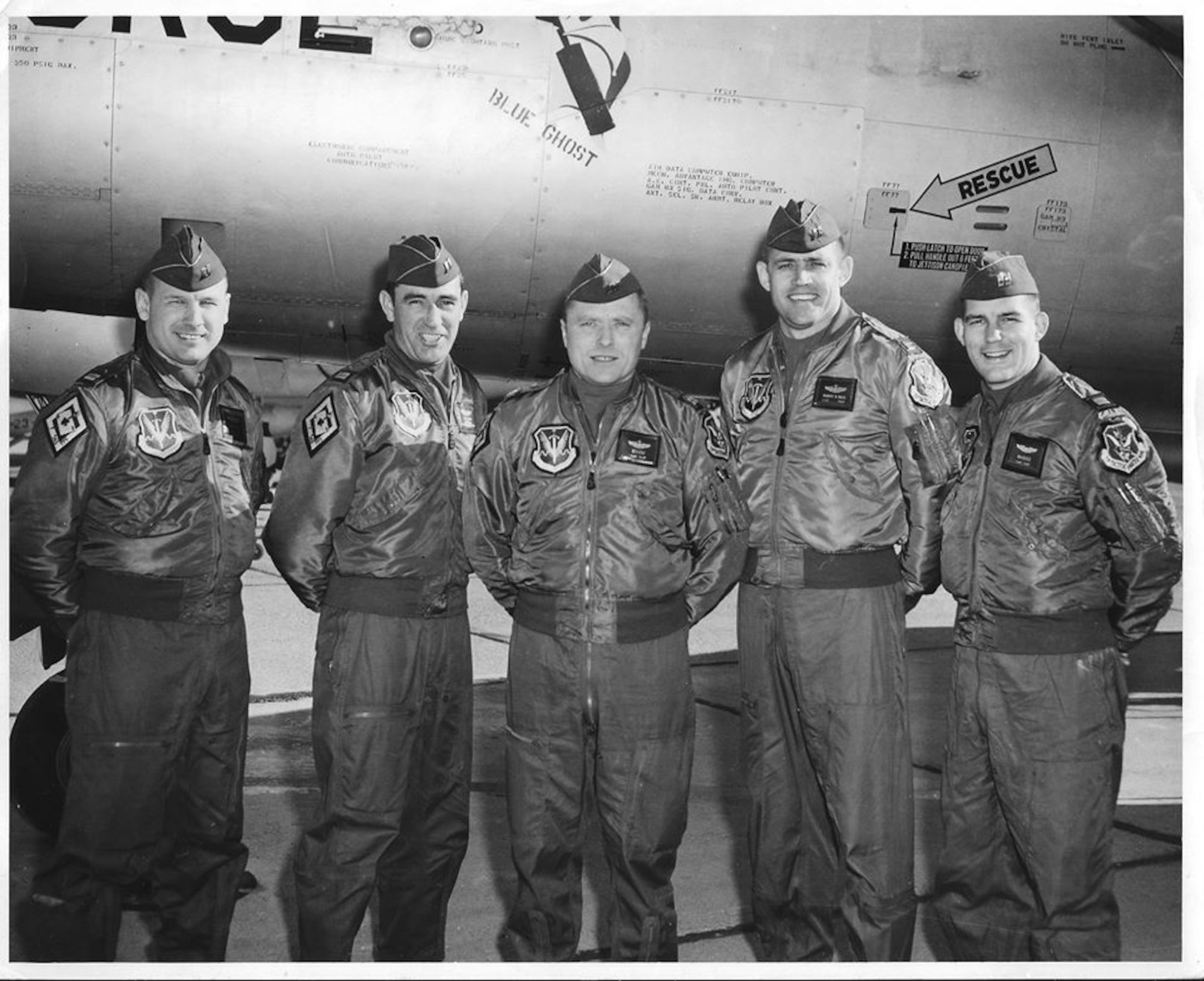
These images remind us of veterans and communities reflecting on the legacy of that day, honoring the sacrifices made and the hope for lasting peace:
Sadly, the peace proved fragile. Violations of the cease-fire occurred almost immediately, and full-scale fighting resumed within months. By 1975, North Vietnamese forces overran the South, leading to the fall of Saigon and the reunification of Vietnam under communist control. The accords did not deliver the lasting peace many hoped for, yet they stand as a testament to American determination to seek honorable resolutions and to the unwavering service of those who answered the call during one of our nation's most challenging conflicts.
To our Vietnam-era veterans of VFW Post 8555: Your valor, endurance, and patriotism remain an enduring source of pride. The Paris Peace Accords marked a chapter's close in a war that tested our nation, but your legacy of duty, honor, and love of country continues to inspire generations. We remember, we honor, and we thank you.