
August marks the anniversary of the events that brought the Second World War to an end in the Pacific. On August 14, 1945 (August 15 in Japan and much of the Allied world), Japan announced its acceptance of the Allied terms of surrender. The formal Instrument of Surrender was signed aboard the battleship USS Missouri in Tokyo Bay on September 2, 1945. These dates are remembered as Victory over Japan Day, or V-J Day—a moment of profound relief after nearly four years of bitter conflict for the United States and more than six years of global war.
The path to that day was measured in blood and resolve. Following the attack on Pearl Harbor on December 7, 1941, American forces fought a long and costly campaign across the vast distances of the Pacific. The first major Allied offensive began on August 7, 1942, when U.S. Marines landed on Guadalcanal in the Solomon Islands. That sixmonth struggle marked a turning point, as American forces seized the initiative and began the long island-hopping advance toward Japan. Later campaigns, including the ferocious battles for lwo Jima and Okinawa, demonstrated both the courage of American service members and the determined resistance of the enemy.
By the summer of 1945, the Allies issued the Potsdam Declaration demanding Japan’s unconditional surrender. When that demand was refused, the United States employed atomic weapons against Hiroshima on August 6 and Nagasaki on August 9. On the same day as the second bombing, the Soviet Union entered the war against Japan. Facing these combined pressures, the Japanese government accepted the Allied terms. Emperor Hirohito announced the decision to the Japanese people on August 15.
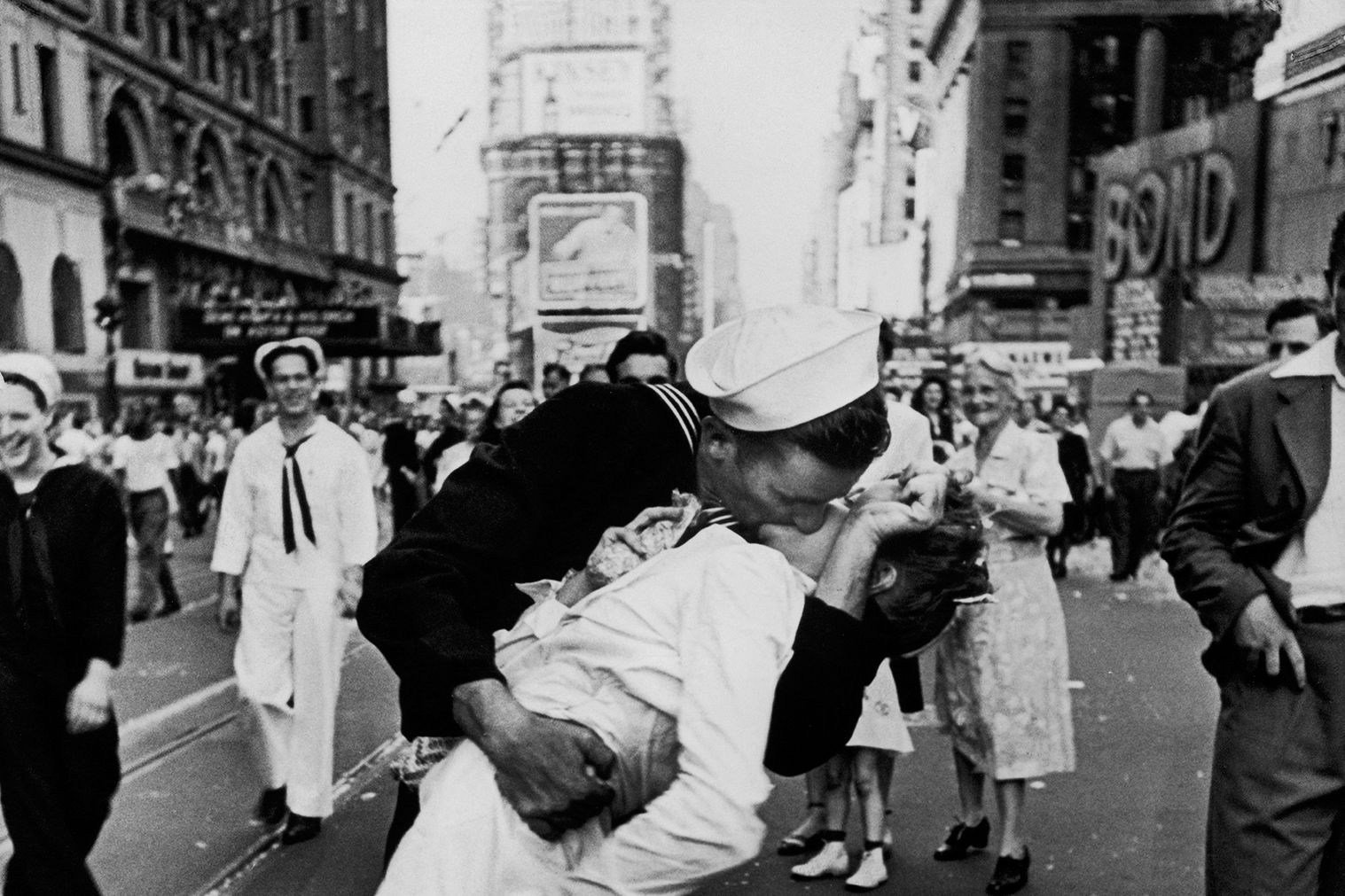
In Washington on the evening of August 14, President Harry S. Truman told reporters that Japan had surrendered unconditionally. “This is the day we have been waiting for since Pearl Harbor,” he said. Spontaneous celebrations erupted across the United States. In Times Square and cities large and small, Americans poured into the streets in a release of long-held tension and gratitude. Truman later designated September 2—the day of the formal signing—as the official V-J Day.
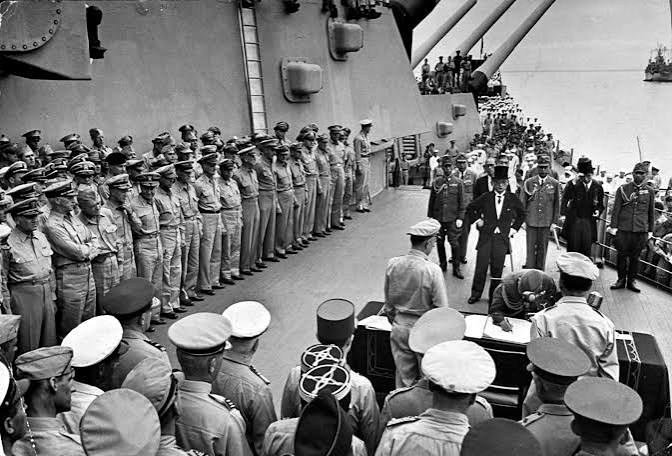
Aboard the Missouri, General of the Army Douglas MacArthur, as Supreme Commander for the Allied Powers, accepted the Japanese surrender on behalf of the Allied nations. Representatives of the United States, China, the United Kingdom, the Soviet Union, and other Allied powers stood witness as Japanese officials signed the documents that ended the fighting. The ceremony closed the most destructive conflict in human history.
More than 400,000 Americans died in World War II. Millions more served, many in the Pacific Theater under conditions of extreme hardship. V-J Day marked not only military victory but the preservation of the free institutions and democratic ideals for which they fought. For the veterans of that generation—the men and women who answered the call after Pearl Harbor—the day remains a time of remembrance and gratitude. Their service helped secure a peace that allowed subsequent generations to live in freedom. The legacy of V-J Day continues to call upon all who have worn the uniform to uphold the liberties purchased at such great cost.